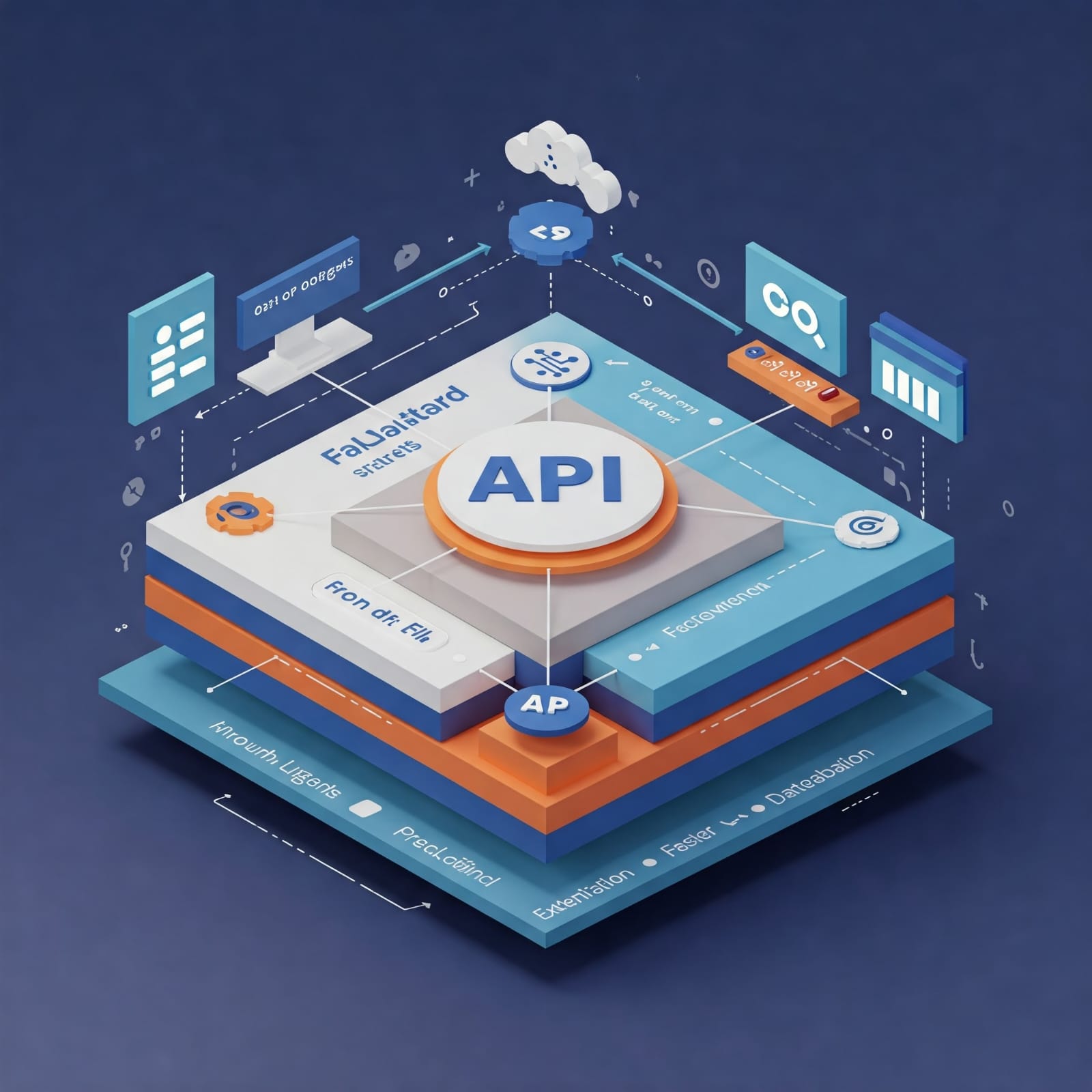
In the dynamic world of full-stack development, APIs (Application Programming Interfaces)
have emerged as indispensable tools. They facilitate seamless communication and data
exchange between different software systems, enabling developers to build robust, scalable,
and interconnected applications. This blog delves into the significance of APIs in full-stack
development, exploring their key concepts and benefits.
What are APIs?
In simple terms, an API is a set of rules and protocols that allows different software
applications to interact and exchange data with each other. It acts as an intermediary,
enabling one application to request services or data from another application.
Key Concepts in API Development:
REST APIs:
Representational State Transfer (REST) is a widely adopted architectural style
for designing APIs. REST APIs utilize standard HTTP methods (GET, POST, PUT, DELETE)
to interact with resources, making them highly versatile and easy to use.
API Documentation:
and comprehensive documentation is crucial for any API. It
provides developers with essential information such as:
Endpoints:
The URLs that are used to access specific resources.
Methods:
The HTTP methods allowed for each endpoint (e.g., GET to retrieve data, POST to
create data).
Request/Response Formats:
The data formats used for requests and responses (e.g.,
JSON, XML).
Authentication:
How to authenticate and authorize access to the API.
API Authentication:
Securely controlling access to an API is paramount.
Common
authentication methods include:
API Keys:
Unique identifiers assigned to each application or user.
OAuth:
A widely used authorization framework that allows users to grant third-party
applications access to their data.
API Rate Limiting:
To prevent abuse and ensure fair usage, APIs often implement rate
limiting, which restricts the number of requests that can be made within a specific time
frame.
Why are APIs Important in Full-Stack Development?
Enhanced Functionality and Reusability:
APIs unlock access to a vast range of external
services, allowing developers to incorporate features like:
Payment gateways:
Integrate with services like Stripe or PayPal for seamless payment
processing.
Social media integration:
Allow users to log in with their social media accounts or share
content on platforms like Facebook and Twitter.
Map services:
Integrate with Google Maps or Mapbox to provide location-based features.
Third-party data:
Access weather data, news feeds, or stock market information from
external sources.
Improved Efficiency and Productivity:
APIs streamline development by eliminating the need
to build everything from scratch. Developers can leverage pre-built APIs to quickly integrate
essential functionalities, saving time and effort.
Increased Flexibility and Scalability:
APIs enable modular development, allowing developers
to easily add, remove, or replace components without affecting the core application. This
promotes flexibility and makes it easier to scale applications as needed.
Improved User Experience:
APIs can be used to create personalized experiences for users.
For example, APIs can be used to recommend products based on user preferences, provide
personalized news feeds, or deliver targeted advertisements.
Learning to Work with APIs:
Start with the Basics: Begin by understanding core API concepts such as REST, HTTP
methods, and data formats (JSON, XML).
Explore Popular APIs: Experiment with popular APIs like the Google Maps API, the Twitter
API, or the Spotify API to gain practical experience.
Build Your Own APIs: Create simple APIs for your own projects to deepen your
understanding of API design and development.
Utilize API Documentation: Become proficient at reading and interpreting API documentation
to effectively integrate external services.
Conclusion:
APIs are fundamental to modern full-stack development. By understanding their principles
and effectively utilizing them, developers can build more powerful, flexible, and user-centric
applications. As the digital landscape continues to evolve, the importance of APIs will only
increase, making them a critical skill for any aspiring full-stack developer.
I hope this blog post provides a comprehensive overview of the importance of APIs in
full-stack development. Remember to tailor this content further to align with your specific
audience and the overall tone of your website.
Note: This blog post is a starting point.You can enhance it further by:
Adding real-world examples: Include case studies or success stories of companies that have
effectively utilized APIs in their applications.
Incorporating visuals: Use relevant diagrams and code snippets to illustrate API concepts.
Updating with the latest trends: Keep the information current by regularly updating the blog
post with the latest trends and technologies in API development.
Mellow Academy is a dynamic EdTech company dedicated to bridging the gap between education and industry by offering practical, skill-based learning programs. With a focus on technology, business, and digital skills, Mellow Academy provides hands-on training to help learners stay ahead in today's competitive job market.
The academy offers career-oriented courses in areas like Full Stack Development, Data Science, AI, Digital Marketing, and Business Management, equipping students with real-world knowledge. Mellow Academy emphasizes industry exposure, live projects, and expert mentorship, ensuring students gain job-ready skills.
With a mission to redefine online education, Mellow Academy strives to empower individuals by providing high-quality, affordable, and flexible learning solutions tailored to industry demands.
Comments (0)

Categories
Recent posts


Machine Learning Course in Delhi: Learn ...
11 Feb 2025
Top 10 Machine Learning Institutes in ...
11 Feb 2025.png)
Top Programming Languages for Full Stack ...
5 Aug 2024